Risk Appreciation, Risk Management & Mediation
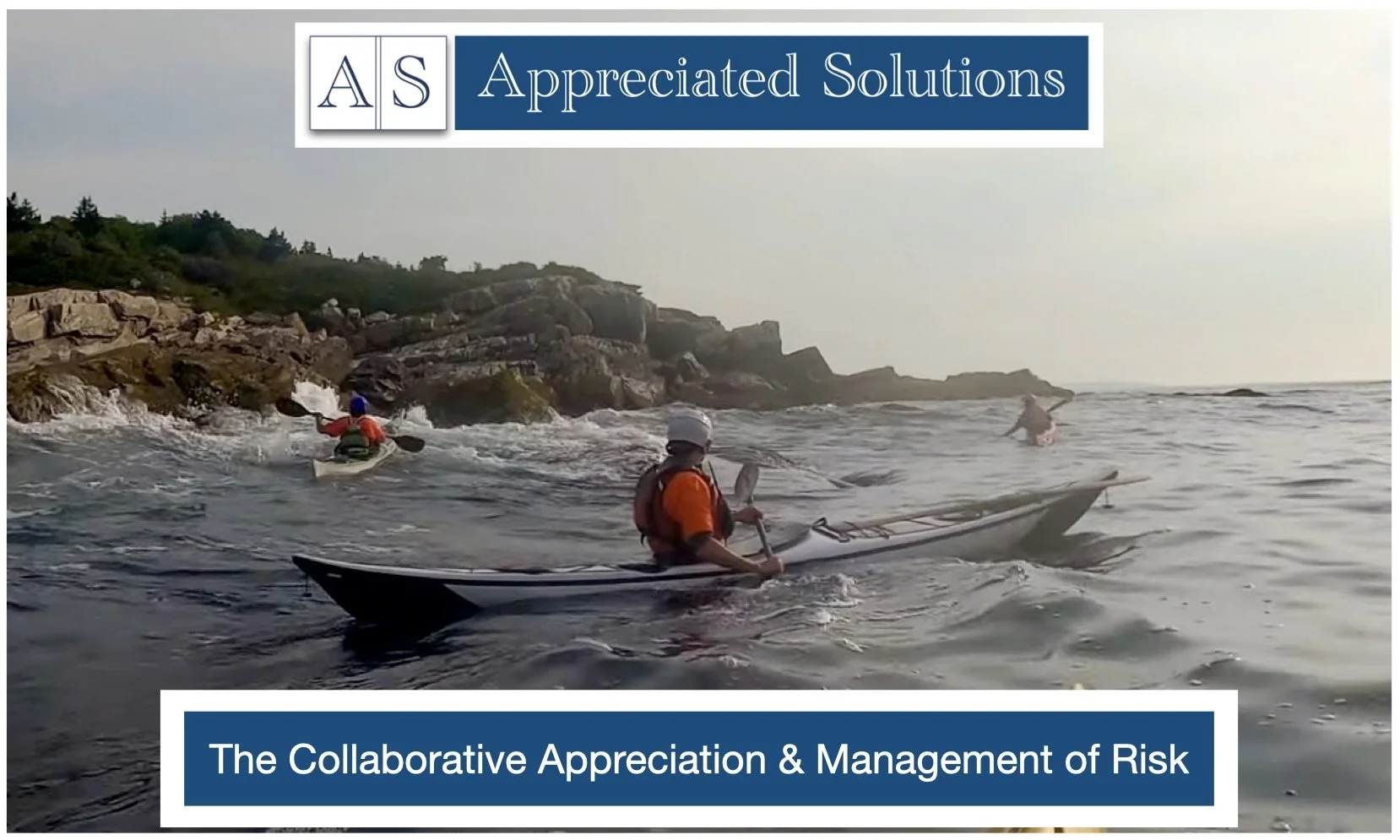
Sea Kayaking Maine’s outer coast.
A series of avalanche incidents in North America and Europe have swept across mainstream media in recent weeks. Tragedy involving adventurers regularly makes headline news. Something about the risks of the outdoors grabs our attention. Perhaps these stories trigger deep emotions that lie dormant under the layers of safety and security bestowed upon us by modern life. Perhaps we are just shocked that fit and healthy people so suddenly fall to the unchecked powers of nature. We understand there are risks, of course, but we are stunned when these transmute into life-threatening events. Oftentimes, we simply ask why. Sometimes, we question the decisions that some people made. But the very nature of risk lies in our inability to predict certain events with any certainty. The best we can do is carefully observe the relevant factors, grade the risks based on our observations, and then decide how best to proceed. That is, we can appreciate and manage our risks - understanding and accepting that even a low grade risk does not mean there is no risk.
My sea kayaking companions and I do this every time we head out on the water. We study coastal charts, tide tables, wind wave and swell data, front charts, and a variety of weather forecasts. I premark my chart with contingency bearings. Each of us assembles and uses essential gear: PFD, VHF, dry suit, helmet, spray deck, contact and extended tow lines, knife, spare compass, signalling devices, spare paddle, pump, paddle float, “ouch pouch,” first aid kit, energy snacks, food, water, and more. We then discuss the conditions, how we are feeling, and what we want from our pending excursion - and everyone continues these discussions as the day unfolds. Our goal is to enjoy ourselves, but we always have an eye on what could go wrong and what areas and conditions we should avoid.
All that said, most of the conditions and circumstances we face are reasonably predictable. We routinely practice rolling and rescue skills, and I am reasonably confident we can manage the risks we choose to take. Through study, planning, preparation, and consultation we make our appreciation of the risks, and we then manage those risks as we see fit. Even so, there are some risks we have missed, a few that morphed into challenging situations, and one that ended in us having to evacuate an injured companion. As much as we might try, no one gets it 100% right 100% of the time. That is the nature of risk.
As every litigator knows, trials are no less demanding. If anything, they require more study, more planning, and more preparation. The one big difference, however, is the outcome is much, much harder to predict. There is a good chance someone will get hurt - at least metaphorically, if not emotionally or financially. The question that hangs in the air is: Who? This does not mean we cannot appreciate the risks of any given trial. We can. Nor does it mean litigants (and their insurers) cannot manage those risks. They can, and they typically do. Much like the adventurer preparing to head outdoors, lawyers uncover and examine the evidence that matters. They plan and prepare based on that evidence, the relevant law, and the environment where that case will ultimately be resolved - be that a bench trial, a jury trial, an arbitration, or a mediation. Only mediation, however, offers everyone the opportunity to discuss, appreciate, and manage risks openly and collaboratively - in much the same way adventurers approach the risks they face when they head outdoors. Mediation may not get it 100% right 100% of the time, but it does offer everyone the best chance to fully appreciate the risks they face and to choose how they want to proceed.